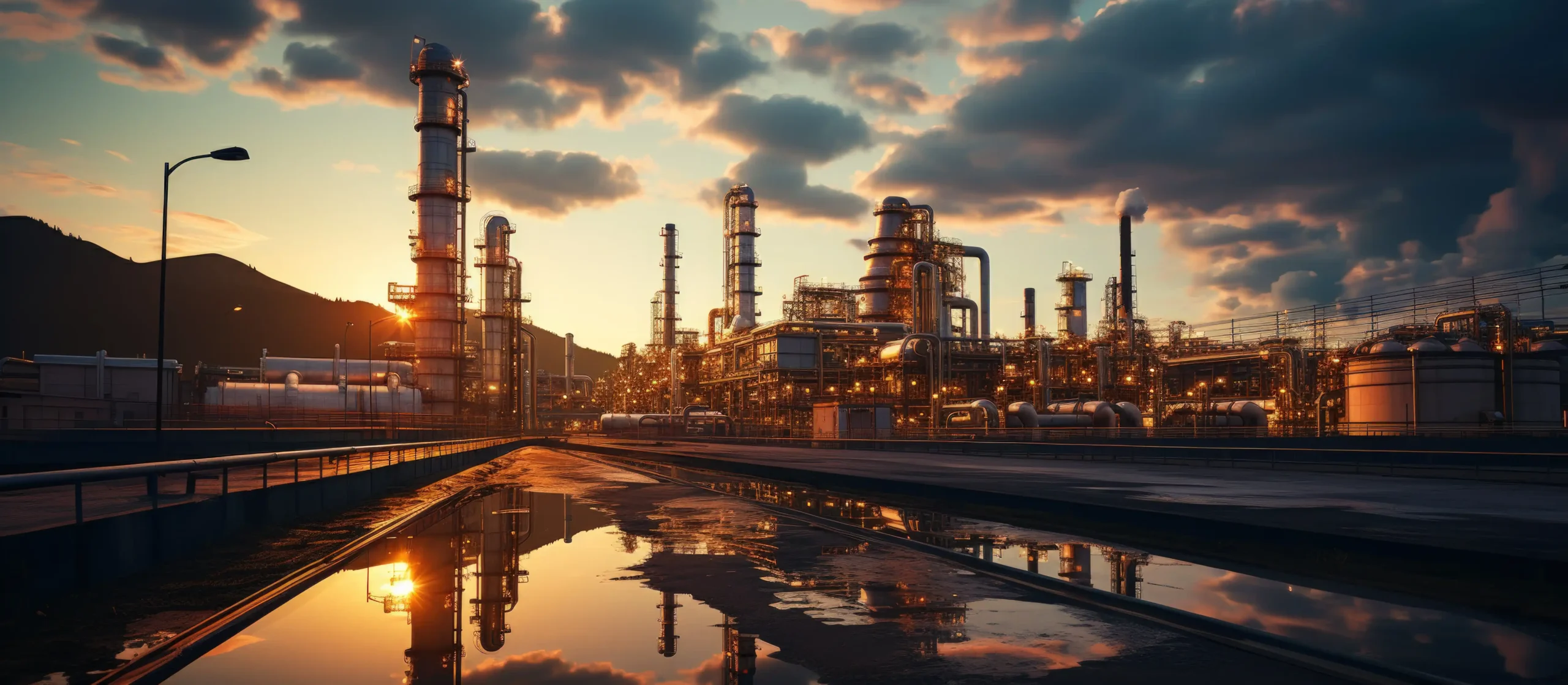
LNG is a clean-burning, high-energy fuel composed mainly of methane (85% min) and trace hydrocarbons. Stored at cryogenic temperatures, it offers a gross calorific value between 9,340–10,420 Kcal/SCM, making it an efficient substitute for coal and oil in electricity generation, heating, and transportation.
| COMPONENT/SUBSTANCE | PERMISSIBLE LIMITS |
|---|---|
| Gross Heating Value (GCV) range | 9,340 – 10,420 Kcal/SCM (1,050 – 1,170 BTU/SCF) |
| Methane | not less than 85.0 Mol % |
| Ethane | not more than 9.2 Mol % |
| Propane | not more than 3.00 Mol % |
| Butanes and heavier | not more than 2.00 Mol % |
| Pentanes and heavier | not more than 0.25 Mol % |
| Nitrogen | 1.0 molecular % |
| Total Sulphur | 10.0 ppm (w) |
| Sulphur in form of Hydrogen Sulphide | 10.0 ppm (w) |
| Maximum variation in Wobbe Index (WI) [WI = LHV (Volumetric Basis / (Specific Gravity w.r.t. Air) 0.5] | +/-5.0 % |
| Contaminants | |
| (a) Trace Metals | |
| i. Pb + Zn | 0.50 ppm (w) |
| ii. Na + K | 0.30 ppm (w) |
| iii. Vanadium | 0.50 ppm (w) |
| iv. Calcium | 2.0 ppm (w) |
| v. Magnesium | 2.0 ppm (w) |
| vi. Sum of heavy metals (Hg + V + Pb + Zn + Ni + Others) | 1.0 ppm (w) |
| (b) Solids / Particulates | |
| i. Total for particle size up to 10 micron | |
| ii. For 2 micron < d < 10 micron | 20.0 ppm (w) |
| iii. For particle size greater than 10 micron | 1.50 ppm (w) |
| 0.30 PPM (w) | |
| (c) Liquid contents | Nil |
| (c) Liquid contents | 112 Kg/Million SCM |
| Hydrogen content | 1.00% (by volume) |
| Acetylene (C2H2) | 0.10% (by volume) |
| Higher Hydrocarbons for n>=3 | 10.0% (by volume) |
| Summer from March to October | P P – 5.0 degrees C) |
| Summer from March to October | (CP – 0.0 degrees C) |
| Winter from November to February | ( P P – 10.0 degrees C) |
Its low sulfur and particulate content makes LNG ideal for reducing greenhouse gas emissions and air pollutants. LNG is increasingly used in shipping, power plants, and urban transport, supported by global investments in liquefaction, regasification, and distribution infrastructure to meet decarbonization goals.

Connect with us today to discover unparalleled services and products tailored to elevate your business to new heights!

